Lost your password? Please enter your email address. You will receive a link and will create a new password via email.
Join Microbiologist.in to unlock a world of microbial discovery! Sign up now and dive into engaging discussions, ask burning questions, and connect with like-minded enthusiasts. Let's explore the fascinating realm of microbiology together!
Welcome back to Microbiologist.in! Log in now to continue your journey through the world of microbiology & Life sciences. Access your account, engage in discussions, and stay connected with our community of microbial enthusiasts. Let's pick up where we left off and explore the wonders of microbiology & Life sciences together!

Lost your password? Please enter your email address. You will receive a link and will create a new password via email.
Please briefly explain why you feel this question should be reported.
Please briefly explain why you feel this answer should be reported.
Please briefly explain why you feel this user should be reported.
Microbiologist.in facilitates the sharing of expertise, connecting learners with knowledgeable individuals. Join our community to enhance your understanding of microbiology and life sciences."
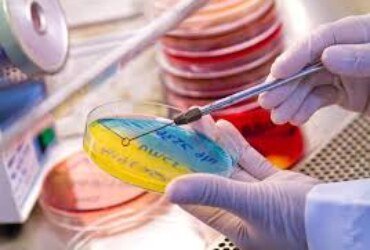
Introduction: Medical microbiology serves as the cornerstone of modern healthcare, providing invaluable insights into the microbial world and its implications for human health. This specialized field of microbiology focuses on the diagnosis, treatment, and prevention of infectious diseases caused by ...

Introduction: Food microbiology stands at the intersection of two vital aspects of our lives: food and microbes. This branch of microbiology explores the diverse array of microorganisms that interact with food, shaping its safety, quality, and shelf life. Join us ...

In the intricate web of life on Earth, microorganisms play a fundamental role as unseen architects of ecosystems. Microbial ecology, a fascinating branch of science, delves into the interactions between microorganisms and their environments, unraveling the mysteries of microbial communities ...

What is horizontal gene transfer, and how does it contribute to microbial evolution?
Common microscopy techniques in microbiology include light microscopy, electron microscopy, and fluorescence microscopy, each offering unique advantages for studying microorganisms at different scales and resolutions.
Common microscopy techniques in microbiology include light microscopy, electron microscopy, and fluorescence microscopy, each offering unique advantages for studying microorganisms at different scales and resolutions.
See lessWhat are some applications of microbial fermentation in the food industry
Viruses cause infectious diseases in humans by invading host cells, replicating inside them, and disrupting cellular functions, leading to tissue damage and systemic illness.
Viruses cause infectious diseases in humans by invading host cells, replicating inside them, and disrupting cellular functions, leading to tissue damage and systemic illness.
See lessHow do bacteria evade the immune system during infection?
Bacteria employ various strategies to evade the immune system, including hiding within host cells, altering surface antigens, and producing toxins that disrupt immune responses.
Bacteria employ various strategies to evade the immune system, including hiding within host cells, altering surface antigens, and producing toxins that disrupt immune responses.
See lessWhat is the role of metabolism in microbial physiology?
"Metabolism in microorganisms involves biochemical processes that generate energy, synthesize cellular components, and enable growth and reproduction.
“Metabolism in microorganisms involves biochemical processes that generate energy, synthesize cellular components, and enable growth and reproduction.
See less𝗪𝗵𝘆 𝗶𝘀 𝘁𝗵𝗲 𝘄𝗮𝘁𝗲𝗿 𝘀𝘆𝘀𝘁𝗲𝗺 𝗿𝗲𝗾𝘂𝗮𝗹𝗶𝗳𝗶𝗰𝗮𝘁𝗶𝗼𝗻 𝗶𝗺𝗽𝗼𝗿𝘁𝗮𝗻𝘁 𝗶𝗻 𝘁𝗵𝗲 𝗽𝗵𝗮𝗿𝗺𝗮𝗰𝗲𝘂𝘁𝗶𝗰𝗮𝗹 𝗶𝗻𝗱𝘂𝘀𝘁𝗿𝘆?
Requalification, also known as ongoing performance qualification, is when the initial testing of a clean room is repeated to ensure that it continues to meet the same requirements as the facility ages. Water is a vital component in the pharmaceutical industry's manufacturing process. Purified waterRead more
Requalification, also known as ongoing performance qualification, is when the initial testing of a clean room is repeated to ensure that it continues to meet the same requirements as the facility ages.
Water is a vital component in the pharmaceutical industry’s manufacturing process. Purified water is essential for the production, testing, and analysis of drugs, and ensures that medicines are free from contaminants and meet the appropriate standards for safety and effectiveness. Low quality water can lead to product degradation, contamination, and loss of product and profit.
Water is used for the manufacture of nonsterile pharmaceuticals, for preparation of laboratory reagents and test solutions, and as the final rinse water for equipment that will come into contact with nonsterile products.
Water tests are used to evaluate microbial content and chemical purity of water samples. Potable water is not suitable for general pharmaceutical use because of the considerable amount of dissolved solids present.
Reverse osmosis is often used to produce purified water because of its low cost, efficiency, and ability to protect systems from bacteria and salts.
Water system validation must demonstrate that the water treatment system operates properly and consistently produces water of the desired quality.
Some conditions for water system validation in pharmaceuticals include
Compliance with pharmacopoeia requirements
▪️A proper sampling system
▪️Detecting and resolving
▪️Contamination problems
In the pharmaceutical industry, there is no set time standard for requalification, but it should be stipulated when a periodic requalification has to be carried out. These requirements should be system-related and risk-based, and in many cases this is every 3 to 5 years.
A detailed review of all changes, trends, and deviations occurring within Annex 2 121 a defined time period may indicate a need for process revalidation.
See lessHow do microorganisms adapt to extreme environments?
Microorganisms adapt to extreme environments through various mechanisms such as genetic mutations, metabolic flexibility, and the production of protective compounds like heat shock proteins or compatible solutes. These adaptations enable them to survive and even thrive in hostile conditions where otRead more
Microorganisms adapt to extreme environments through various mechanisms such as genetic mutations, metabolic flexibility, and the production of protective compounds like heat shock proteins or compatible solutes. These adaptations enable them to survive and even thrive in hostile conditions where other organisms cannot.
See less𝗪𝗵𝗮𝘁 𝗶𝘀 𝘁𝗵𝗲 𝗩𝗶𝘁𝗲𝗸 𝗺𝗲𝘁𝗵𝗼𝗱 𝗼𝗳 𝗯𝗮𝗰𝘁𝗲𝗿𝗶𝗮𝗹 𝗶𝗱𝗲𝗻𝘁𝗶𝗳𝗶𝗰𝗮𝘁𝗶𝗼𝗻?
Vitek is a bacterial identification system that uses biochemical reactions and nutrient usage to identify bacteria and yeast. The Vitek 2 is an automated microbial identification system for healthcare laboratories that uses fluorescence-based technology to provide fast, accurate results for microbiaRead more
Vitek is a bacterial identification system that uses biochemical reactions and nutrient usage to identify bacteria and yeast.
The Vitek 2 is an automated microbial identification system for healthcare laboratories that uses fluorescence-based technology to provide fast, accurate results for microbial identification and antibiotic susceptibility testing.
The Vitek 2 system has a comprehensive database, an extensive identification and susceptibility menu, and can reduce the time it takes to get results.
The Vitek 2 Compact system offers quality control testing solutions with rapid results, minimal training time, and an extensive identification database.
Vitek Solutions can get results to clinicians 14 to 20 hours earlier, facilitating clinical decision-making for optimal treatment. VITEK MS ID saves labs about 50% compared to traditional ID methods, and same-day AST reporting with VITEK® 2 can reduce hospital costs as much as 40%.
See less